My Workplace Testimony – Andrew Humphreys
My career started with a chemistry degree, which I chose because Chemistry was my favourite subject at school. When choosing a degree, I felt under pressure to do a ‘gap year’ of Christian ministry as many of my Christian peers were doing this and it seemed the right thing to do. However, on visiting Southampton University, I remember walking off the bus onto campus and the moment my foot touched the ground, I had a profound sense from God that this is where I was meant to go, which completely settled the issue.
However, I found that standing in a fume cupboard for six hours per day wasn’t quite like the chemistry I learnt at school and through my role coordinating prayer for local mission organisations with the university’s Christian Union, I decided that I wanted to do work that had a more direct impact on people in need. So, after university, I did the gap year but this time to prepare me for a career working to improve the lives of people in need.
This was the first example of how God directed my work and career choices.
Worked in different public services – wanted to address issues
Having completed my gap year working with homeless people and children who had been, or were at risk of being, excluded from school, I got my first job working with long-term unemployed people to help them get back into work. Within a couple of years, I found myself working with those in the criminal justice system with the same employer. From there I went into a management role for the same work when contracts changed over, and went on to work in ‘offender learning’ for a FE College, more welfare to work programmes and eventually older people’s social housing.
Over this 15-year period, I had an increasing desire to ‘fix the system’ that seemed to both contribute to the problems people were having in their lives, and block any real solutions for them working. Over this period in my life, I very much considered my paid work as being completely separate from any form of Christian ministry and while I wanted to address issues affecting those most in need, my thinking was that I wanted my work to be ‘worthwhile’ as a bit of a sanitation issue, but didn’t see this as a fulfilment of God’s purpose in my life.
Thought of work as separate from ministry “worthwhile’
If you’d have asked me to talk about it, I would probably have said that paid work was really about earning money to pay the bills and do something for God with any surplus, such as give to the church, and that anything that could be described as ‘Christian ministry’ would happen in a church on a weekday evening, or at weekends, such as youthwork.
Restructure – which job
Around this time my then employer was having a restructure following the appointment of a new CEO and while there were more relevant jobs at my level in the organisation, so no real risk of losing my job, I didn’t really want to do any of the new jobs as in practice they had less responsibility, and opportunity, to make a difference, than I was used to. I felt like I had a very clear decision, I could either accept one of the new roles on offer where I was or look for a job elsewhere.
Prayer and dream
While this was happening, I went to a social event on a Saturday evening and got chatting to a couple of other Christian men over dinner, sharing my dilemma with them. At the end, they both said they would like to pray for me. I welcomed their offer, so they prayed for me there and then. I didn’t get a sense from God which of the two options I should choose so, hiding my mild disappointment, I thanked them and we said goodbye.
However, that night I had a dream. In my dream, God approached me holding an object in his hands. I can’t really tell you what God looked like, or even what the object looked like, but I knew that it was God, and I knew that the object He was holding in his hands was a business that delivered consultancy to organisations delivering public services. I knew that the business focused on improving services for those most in need and that it helped leaders and others work through complex problems.
I also knew that the name of the business was ‘The Improvement Agency.’ As God approached me in the dream, He held out the object in His hands and said:
‘This is yours if you want it.'
 At that point I woke up, early on the Sunday morning. Upon waking, having never even considered doing anything other than taking a job with an employer, I knew, beyond any doubt, that I was meant to set up a consultancy business to provide help to improve public services, called The Improvement Agency. I felt like Joseph in the New Testament of the Bible, who had gone to bed one night, determined to do one thing (divorce Mary), having an encounter with God (via an angel) in a dream and then woken up the next morning, having made a decision in his dream to do the very opposite.
Having never even thought of doing anything like that, once we returned home from Church, I started researching how such businesses operate, and what sort of training or qualifications I needed to be able to do that work.
I quickly found out that most people who work as consultants have an MBA or similar so I looked into where and how I could do that. We were in a very fortunate financial position at the time so I was able to tell my work that week that I would not be taking up one of the new roles, hence receiving some redundancy money, and we put our house on the market to fund me doing a one-year full time MBA at Henley Business School.
It was at this point that my ideas about work and Christian ministry completely changed. I realised that the work we do, for many Christians, is our main ministry. I realised that God is not just interested in what happens in Church on a Sunday, or even what we do in poor parts of the world (near or far), but that God wants the whole of the economy working for His purposes and that He appoints and anoints believers not just to serve the church, but to serve the world through the paid work they do.
MBA
Over the year that I undertook my MBA, 2016 to 2017, I hijacked a lot of the topics to learn about the history of public services and why they are the way they are today. I learnt a lot about how manufacturing methods were inappropriately applied to public services to try to reduce their cost and about how many of the design principles of public services work against their purpose of making life better for everyone and particularly those in greatest need.
A key moment in my MBA was hearing about management as a practice to ‘care for the system of work’, in that it wasn’t a manager’s job to deliver the work, they are responsible for making sure the system of work is in good enough condition to fulfil its purpose, deliver all the work required and achieve its desired outcomes. This really made sense to me, and I had a sense also that this is how God sees His creation, that He thinks about every aspect of His creation and cares for each part. It dawned on me that it is the inadequacy of systems that people design, often without any input from God, that mean we have to make decisions about ‘trade offs’, i.e. what we can afford to do, who might win and lose because of a decision we make.
This idea of caring for the system which covers all aspects of what we do has remained a theme in my thinking and work and I have since produced a video explaining where we find this theme in the Biblical narrative, called “All things”, which you can watch here.
Professionally, this also pointed me towards ‘systems thinking’ which is an approach that considers how all the different parts of complex systems interact with each other and what happens as a result.
South West London and St Georges
During my MBA I did a live project with South West London and St George’s Mental Health NHS Trust about how they managed relationships with their stakeholders. I made several visits to the Trust’s main hospital site in Tooting and because of its location, it was much quicker for me to drive there than take public transport so I decided I would pray for the organisation while in my car travelling to and from the hospital.
On more than one of these journeys, I had a very strong sense of God being powerfully at work and doing something significant. At the time I thought this would be as a result of the work I was doing on my project and got very excited about what could come out of it. So, I was a bit disappointed when I completed the project, which went well but did not seem to lead to any profound change or transformation at the Trust. You’ll see below what God was really doing at the time.
The Improvement Agency
As I approached the end of my MBA, I established The Improvement Agency and after a slow start I began to pick up work in public services with my first paid commission to design a new service for deprived families in the Westminster area of London, who were often hidden by the official statistics because the average income is so high in that locality. This would go on to become a theme in much of my work.
Innovation Diagnostic
When I first started, because I didn’t have much work on, I wanted to get out of the house regularly so I based myself in the café at a local Christian ministry running community projects and would join their morning prayer meetings. One morning we focused on praying for people to receive the right words from God when they needed them. We prayed for each person in turn until eventually the group turned to me and asked to pray for me.
I explained that I wasn’t planning on doing any ministry that day, as I had planned a task to develop a diagnostic survey for ‘innovation readiness’ for public sector organisations, combining disciplines I had learnt about on my MBA, a task I had been struggling with. The group insisted on praying for me for that and I gratefully accepted.
When I sat down in the café with my laptop, it was like the whole of the diagnostic framework was suddenly downloaded into my mind, to the extent that I simply couldn’t write it all down quickly enough. I knew that I had received something from God so trusted that it was good content, but I had no idea if it would work in practice.
Shortly after that I was asked if I could help Imperial College NHS Trust in London evaluate an improvement programme and if I had a questionnaire that could help with this. I proposed my innovation readiness questionnaire and the Trust agreed. Having completed the survey, I compiled the results and developed a presentation which I delivered to the staff and senior manager responsible for the work.
I remember looking at one of the slides as I explained my conclusions from the survey and when I looked back at the group in the room, they were all staring at the results with their mouths open. When I asked if I had said something wrong, they shook their heads until one person eventually asked: “How could you find out so much about this organisation with a 26-question survey?” The organisation went on to make several changes as a result, some of which led to significant innovation during the pandemic when they manufactured their own PPE on site and the head of improvement there went on to set up the Nightingale Hospital.
It was an early lesson that the best ideas are those God provides or inspires in us and that I was never to stray from hearing His voice for my work and what it could achieve.
Public Service Prayer Network and Transform Work
 As I embarked on this new phase of my work, I had a sense that there was meant to be an explicitly Christian element to my work, as well as the commercial activity, both of which were to improve public services for those who need them the most. My vision was that both the consultancy and the explicitly Christian activity would lead to the same sort of transformation of public services on God’s behalf, just via different means.
As I was praying about this in church one day, I heard God say the words: ‘Public Service Prayer Network’. I had a vague idea of what this might be so started to research what was already happening in this space, which led me to Transform Work and Ros Loaker, the ministry’s leader.
Having met with Ros, I agreed to become a Transform Work Ambassador, supporting Christians to establish workplace groups for mutual support, equipping and encouragement and to have a formal relationship with their employer through which they can pray for their senior leadership and engage on policy and other issues.
The first organisation that Ros asked me to take on was, surprise, surprise, South West London and St George’s Mental Health NHS Trust, which had a fairly new and developing Christian workplace group. I was introduced to David Heasman, then an Occupational Therapist for the trust and leading the Christian Staff Network.
On my first visit to David at the hospital in Tooting, I explained that I had done my MBA project there and told him about the experience of praying for the trust. David seemed very keen to understand exactly when this was, so I worked out the dates in 2017. It turns out that it was exactly at this time that David, having felt prompted by God, approached the Trust to ask to set up a Christian staff network and gained support to do so, having shared what the Holy Spirit put on his heart in a meeting with diversity leads.
You can read more about that in this article on the Transform Work website, here.
Somerset West and Taunton
My first substantial project for a local authority was to help combine two councils in Somerset that were being merged into a new council, Somerset West and Taunton (now part of the single Somerset Council). I had to use my own laptop for the work and had left on it a screensaver that displayed Bible verses. When I was in my first team meeting, the screensaver came on over a slide on the big screen, which I quickly dismissed, wondering what people in the room would have thought.
However, this was God’s plan as two of my team happened to be Christians and were delighted to find out that I was also a believer. I agreed to support the Christian prayer group and help them set up a more formal CWG. This took some time because of the extent of changes going on, but it confirmed my sense of calling to both commercially viable consultancy and explicit Christian ministry alongside each other. I have since connected with the Christian groups in other clients for which I have worked and supported them to address some of the same issues I have come across as a consultant.
SAVVI – previous vision
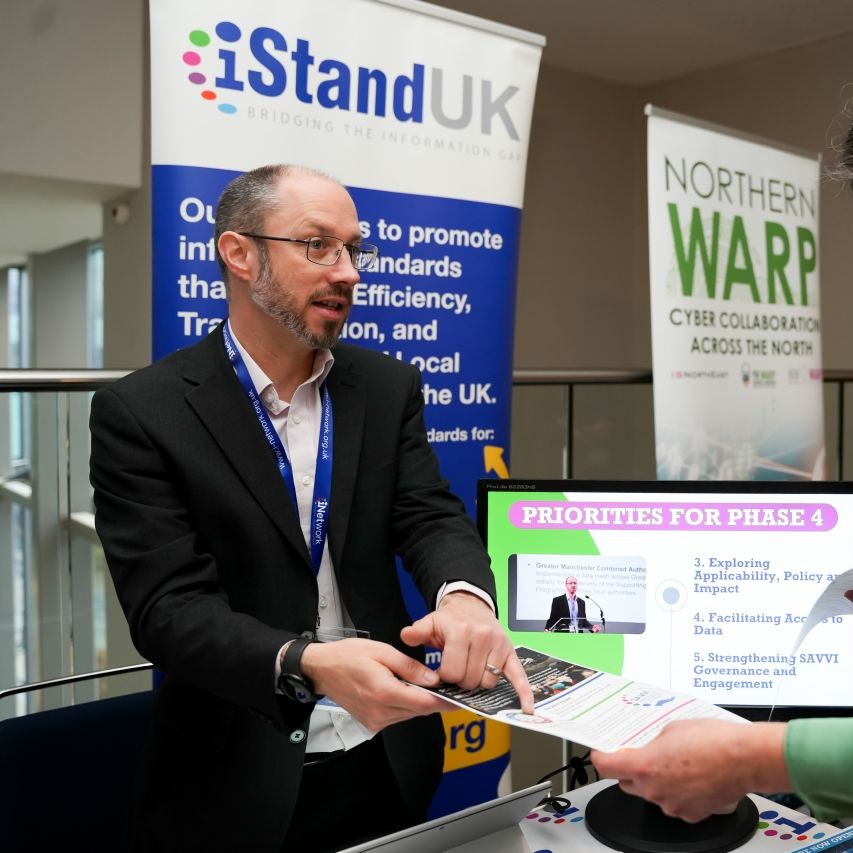
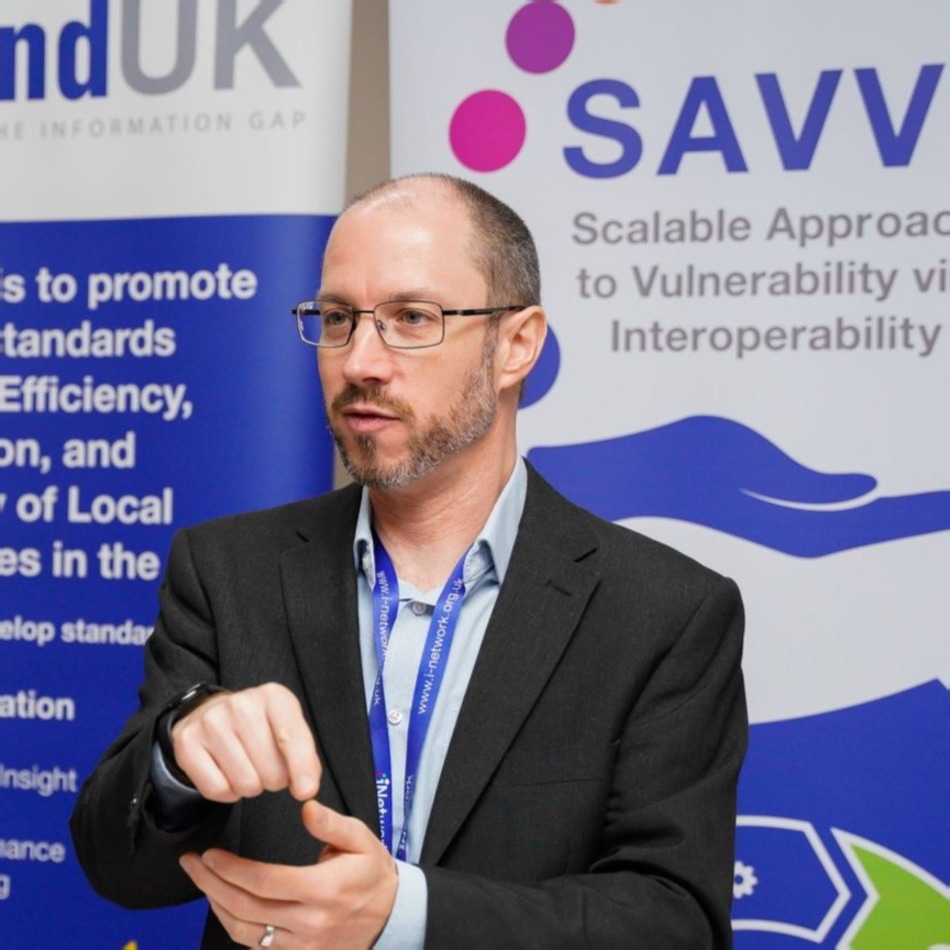
The focus on ‘systems thinking’ put me in touch with a consultancy company working in this space ‘RedQuadrant’ in 2022 and since then, through the company, I have worked on a public sector project called SAVVI, which is short for “The Scalable Approach to Vulnerability Via Interoperability”. That is a bit of a mouthful, but the project came out of the pandemic when local councils had to very quickly find and contact anybody who would be particularly vulnerable during the lockdowns and from the pandemic generally, for example if they depended on medicines being delivered to their home, or other essential services.
The project is a framework to bring personal data together from across the system to find vulnerable people to offer them support. Through SAVVI I have helped councils find people who are vulnerable in emergencies, like floods, and those who are in need because of financial hardship, to ensure they are receiving all the support they need. The project has also influenced Government to introduce data standards for vulnerability and even new legislation that will make it easier for local services to find and support vulnerable people.
I was recently given the opportunity to increase my commitment to and work on the SAVVI project via a national delivery manager role. It felt like a significant decision as it would effectively preclude me taking on some other types of work for the time being. When I prayed about it, God reminded me of a prayer time I had many years before, as I had started to develop my ideas about how public services should work.
I had been praying and thinking about what God would say to the Prime Minister if he met with God each week, rather than (then) the Queen. The idea that came into my mind at that point was that God would give the Prime Minister a list of names of people in need and what they needed and would say to the Prime Minister, this is your job as a government working on my behalf. Make sure these people get what they need. At the time I dismissed that as a rather fanciful idea that didn’t relate to reality.
The astonishing thing is, that is exactly what the SAVVI framework does. It enables local councils to produce a list of people linked to a need, such as potential homelessness or financial hardship, with whom they can then make contact and offer them support. On being reminded of this time of prayer, it didn’t take long to make the decision to accept the offer of work.
You can read more about that in this SAVVI project blog post.
God’s vision for public services
Today, I believe God has a heart for public services, those who work in them and those who need them the most. A verse that keeps coming back to me is Proverbs 13:23:
“An unploughed field produces food for the poor, but injustice sweeps it away.”
The sense I have from this verse is that God has placed in his creation, more than we need to ensure everybody has sufficient, but that the systems people have developed consistently produce inequality and on the sharp end of this inequality is poverty, which becomes an injustice, especially when ‘the system’ is configured to maintain the status quo, rather than address the most pressing needs in society.
The role of public services, therefore, is to ensure there is justice by providing those people who are experiencing poverty, and all of us to some extent, with what we need to fulfil our God-given purposes, be it education, healthcare, welfare benefits, a decent home or even care when we are old, frail or disabled.
Public Service Prayer Network
I have not yet returned to the idea of a ‘Public Service Prayer Network’, nor do I even fully know what it is or how it works. However, God has not taken the idea from me and my sense is that this will be one of the next steps in my own Christian ministry in the realm of public services. I aspire to continue to hear God’s voice to inform my own work and consulting activities, but I feel increasingly sure that God has plans that are far bigger than anything I could do myself and would relish the opportunity to engage with others who have a similar calling to explore what God is saying and doing in this earthly domain.
| During 2025, we undertook an extensive search to appoint new Trustees. Thank you to all those who applied and supported us in this process. |
| Transform Work recently joined hundreds to celebrate the official start of building the Eternal Wall of Answered Prayer... BUT we still need YOUR WORKPLACE answered - together we could reach 1000 answered prayers... |
| As churches across the country begin preparing for Remembrance Sunday services, please see below links to a range of video resources. |
| Transform Work is seeking to appoint new Trustees to help guide and strengthen our mission. |
| Transform Work partnered with The Business Connection and SOLAS to organise Thrive’25 Conferences - a multi-city Christian event designed to encourage, equip, and empower believers to live out their faith in the workplace. |
| "Please also pray for me the rest of the year too, because being a Christian in NHS Scotland is harder than being on short term mission in Africa!" |
| Come join us at Skegness and receive 15% off with our special code. |
| Transform Work will be leading a workplace seminar series at this year’s Spring Harvest. The seminar leaders are our wonderful friends Susie Hunt and Stephen Adams. |
16/06/2026